
STEVE HARRINGTON
Marty McFly, Stranger Things, and how Nike became a major name in fashion

Steve Harrington is kinda the character of all time.
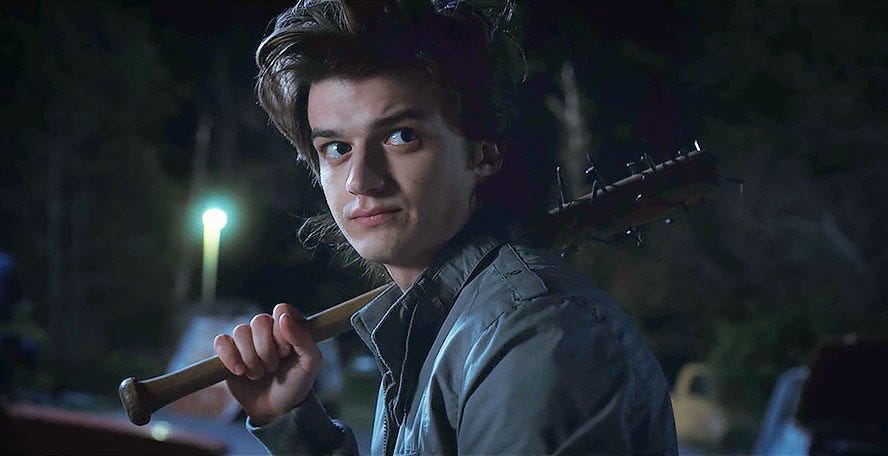
Played by Joe Keery in STRANGER THINGS, Steve is basically like if the most beautiful person you’ve ever seen was also an embarrassing uncle who was also a single mother, and then in their free time they work the oddest jobs they can find in town. As a character, his character growth is really something special. When we first meet him, Steve is textbook ’80s high-school royalty: perfect hair, crisp polos, clean jeans, and an obvious tell that he’s dressing for status. Everything about his look is controlled and intentional, like he’s curating how the world sees him. He’s also viewed as a bully in Season 1 (I kinda disagree, but that is another story). Still, as we spend more time with him, something interesting happens: the ego fades, empathy kicks in, and without trying to, he accidentally becomes the emotional backbone of the group. His wardrobe follows that same shift. The polish drops away. His clothes start to feel softer, looser, lived-in, like they’ve actually been worn through long days and worse nights. His overly preppy pieces quietly exit the frame, replaced by soft details, denim that looks broken-in, and t-shirts that feel instinctive rather than styled. And sneakers, particularly Nike silhouettes rooted in real cultural history, become central to how we read him.
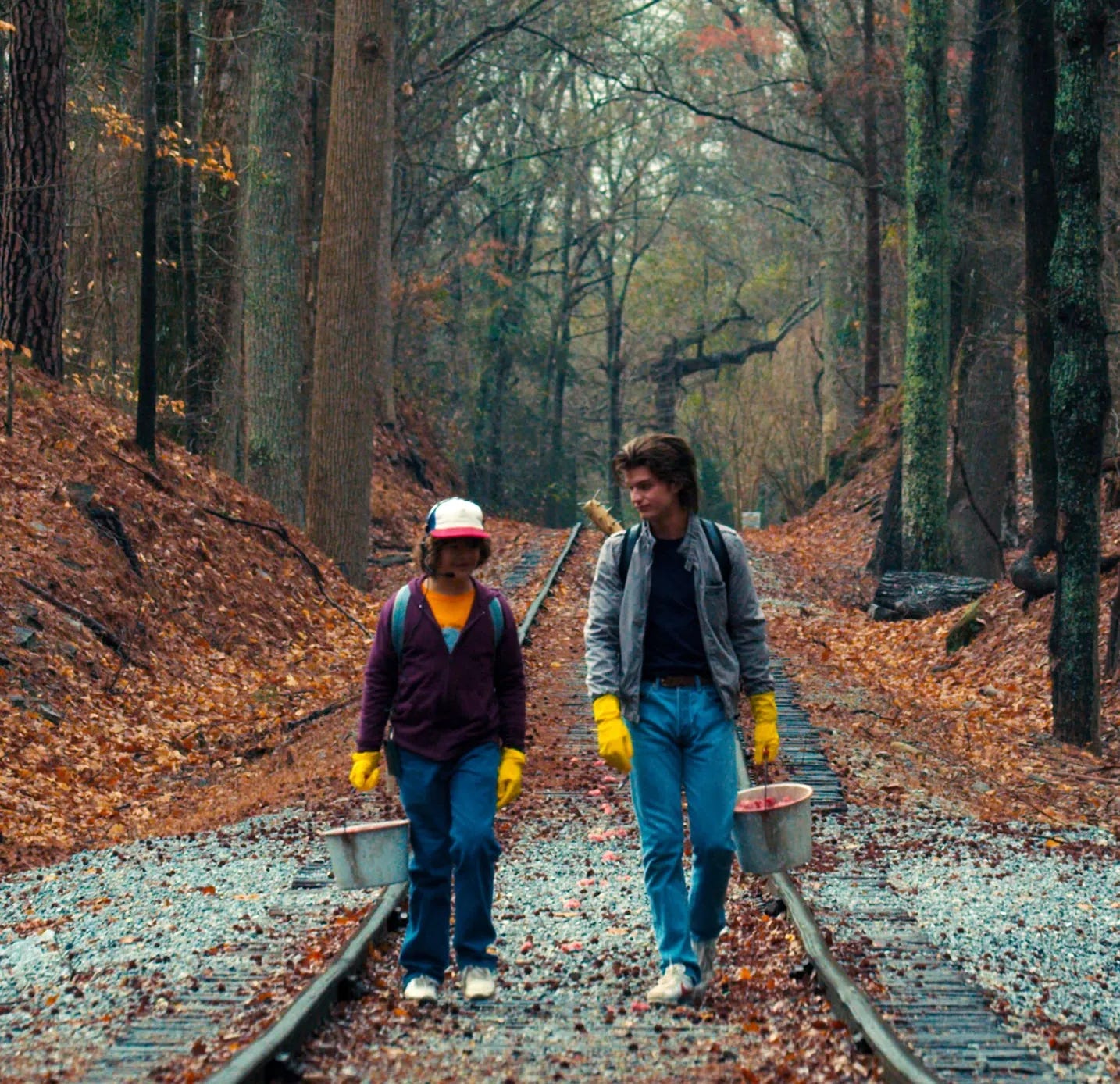
Sneakers in film and television have long served as visual shorthand, quietly telling us who a character is, where they come from, and how they move through the world. Steve’s Nike choices aren’t flashy or futuristic; they’re familiar, practical, and era-specific. In later seasons, and especially in the forthcoming final chapter of STRANGER THINGS, the inclusion of models like the Nike Mac Attack, the Field General, and the Stranger Things–branded Air Max ’87 feels intentional rather than promotional. These are shoes worn by someone active, protective, and grounded, someone who runs toward danger rather than away from it. Steve is no longer dressing to be admired, he’s dressing to function, to survive, to show up.
For much of the 20th century, sneakers existed almost exclusively within the realm of athletics. They were tools, not fashion statements, meant for track stars, basketball players, or gym class, not everyday life. What film and television did starting in the late 1970s and accelerating through the ’80s and ’90s, was quietly dismantle that boundary. Nike, more than any other brand, became the bridge.
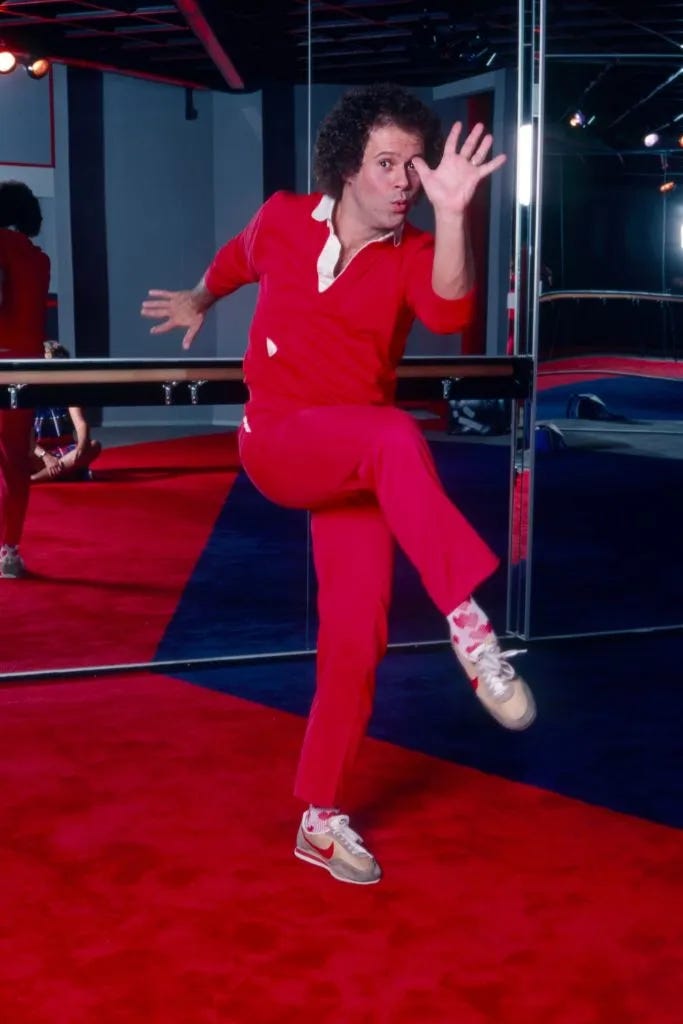
Richard Simmons (may he rest in peace) was one of the key figures in the aerobics world in the 80s. I vividly remember my mom watching SWEATIN’ TO THE OLDIES and could probably even still recall some of the dance steps to this day. Another thing I will never forget about him is his signature style: short shorts, a tank top, and (of course) a great pair of athletic sneakers.
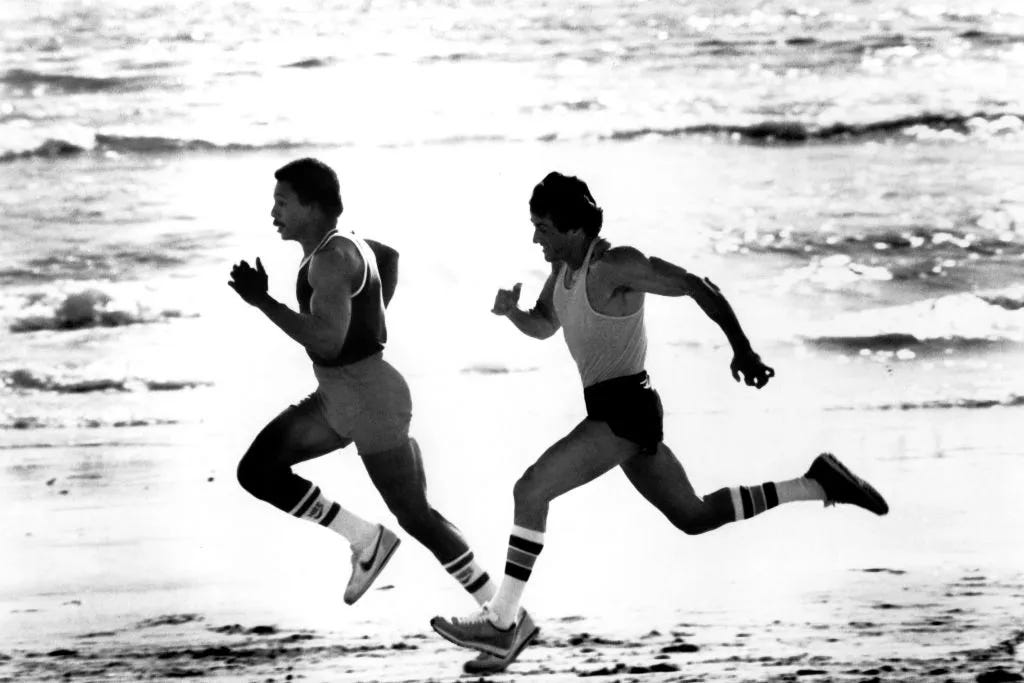
In the early days, the presence of sneakers on screen was still tied closely to performance. In ROCKY III, Nike trainers show up in training sequences that emphasize grit, discipline, and physical transformation. The shoes are functional, grounded in sport, and visually reinforce the idea that sneakers belong in the gym, on the track, or in the ring.
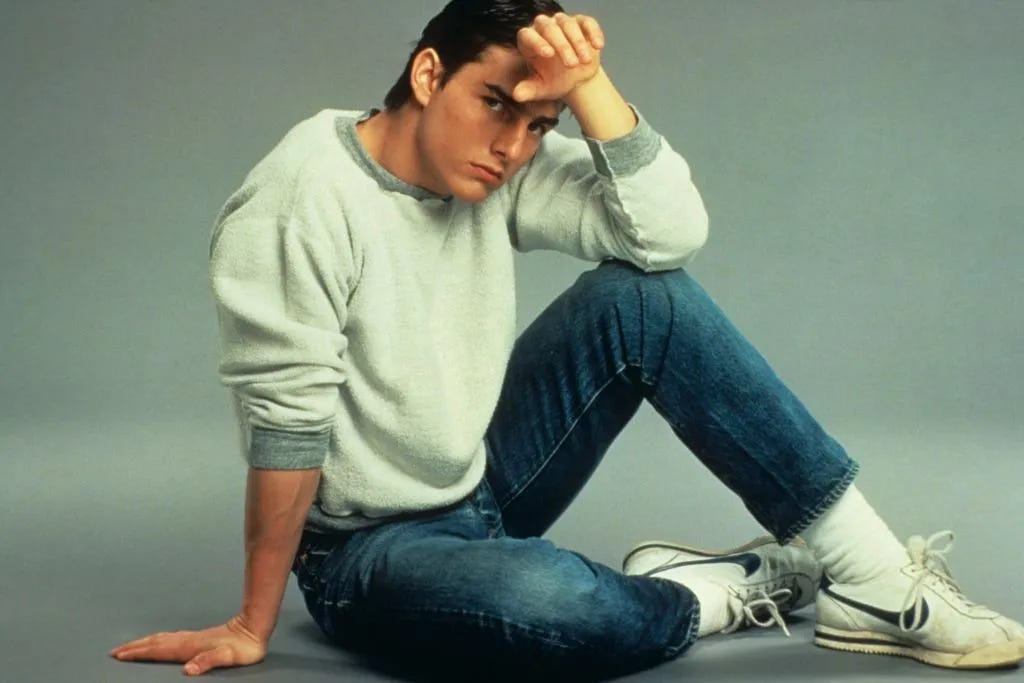
A year later in ALL THE RIGHT MOVES, Nike footwear again appears in a sports-driven narrative, worn by a young Tom Cruise as part of his high-school football world and still practical, believable, and rooted in athletic aspiration rather than style.
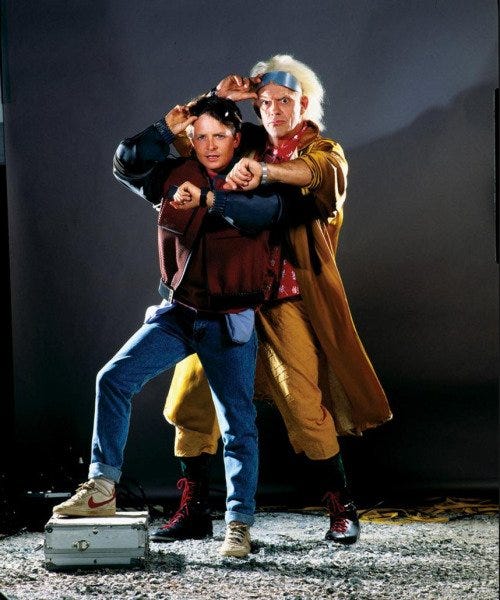
Then something shifts. BACK TO THE FUTURE quietly pulls Nike out of the locker room and drops it into everyday life. Marty McFly’s Nike Bruins aren’t about competition; they’re about youth, ease, and movement. Fox insisted on wearing his own shoes, and the Bruins ended up becoming inseparable from Marty McFly’s image. They weren’t futuristic or stylized, they were real, worn, and accessible. Four years later, Nike swung the pendulum in the opposite direction with the Air Mag in BACK TO THE FUTURE PART II. Designed by Tinker Hatfield, the self-lacing shoe was speculative fantasy, but it planted the idea that sneakers could be aspirational objects tied to imagination and technology. Sneakers are no longer just worn; they’re dreamed about. They signal the future, innovation, and desire. Sport is still in the DNA, but the meaning has expanded.
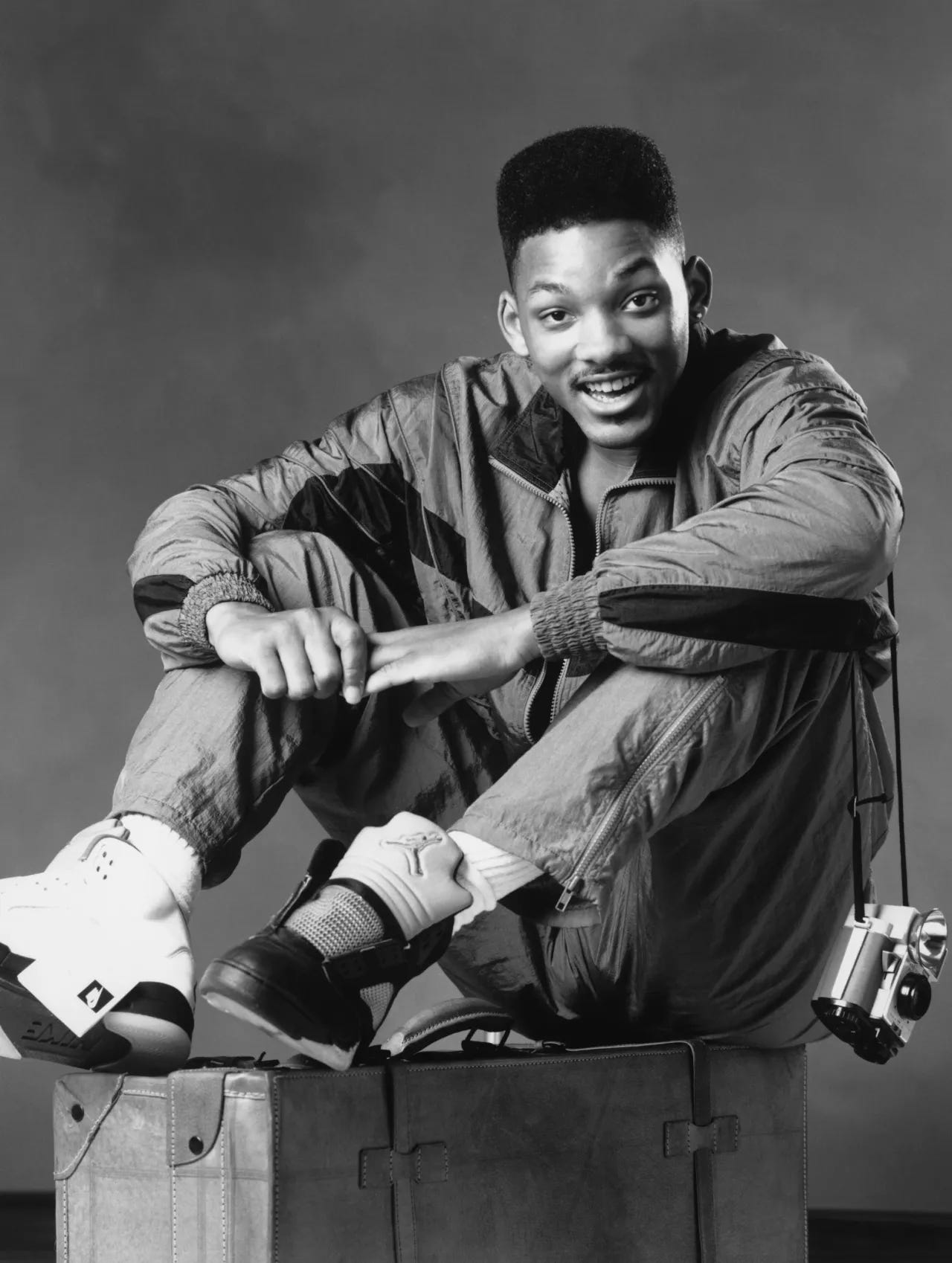
Television pushes that evolution even further. On THE FRESH PRINCE OF BEL-AIR, Nike sneakers (especially Jordans) are central to how we understand Will Smith. They’re worn fashion-first; they signal confidence, cultural awareness, and an instinctive sense of personal style. Around the same time, Spike Lee’s films lock sneakers into a much deeper cultural conversation. In DO THE RIGHT THING, the Air Jordan 4 has nothing to do with sport; it’s about respect, ownership, and value. That single moment reframes sneakers as emotionally charged fashion objects, capable of carrying meaning that extends far beyond athletics.
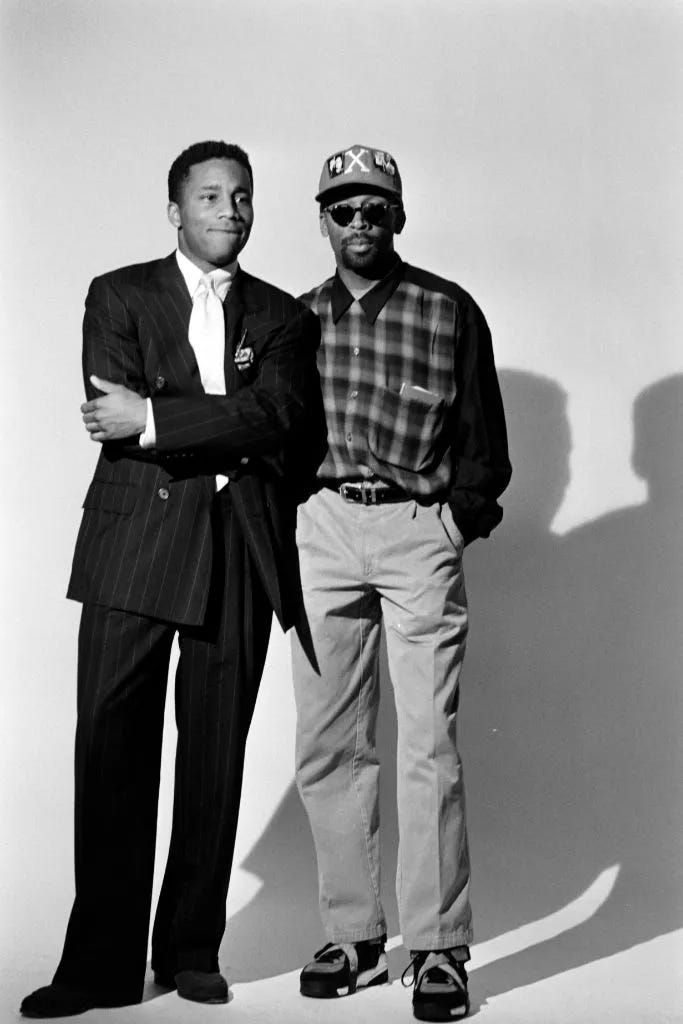
Spike Lee doesn’t just put sneakers on screen, he genuinely lives in them. His love for Nike shows up off-camera just as much as on-camera, and that relationship naturally spills into his creative world, including at the launch of his 40 Acres and a Mule fashion line. That collection sits at the intersection of cinema, streetwear, and activism, reinforcing the idea that sneakers (and Nike specifically) belong in conversations about identity, power, and style, not just sport.
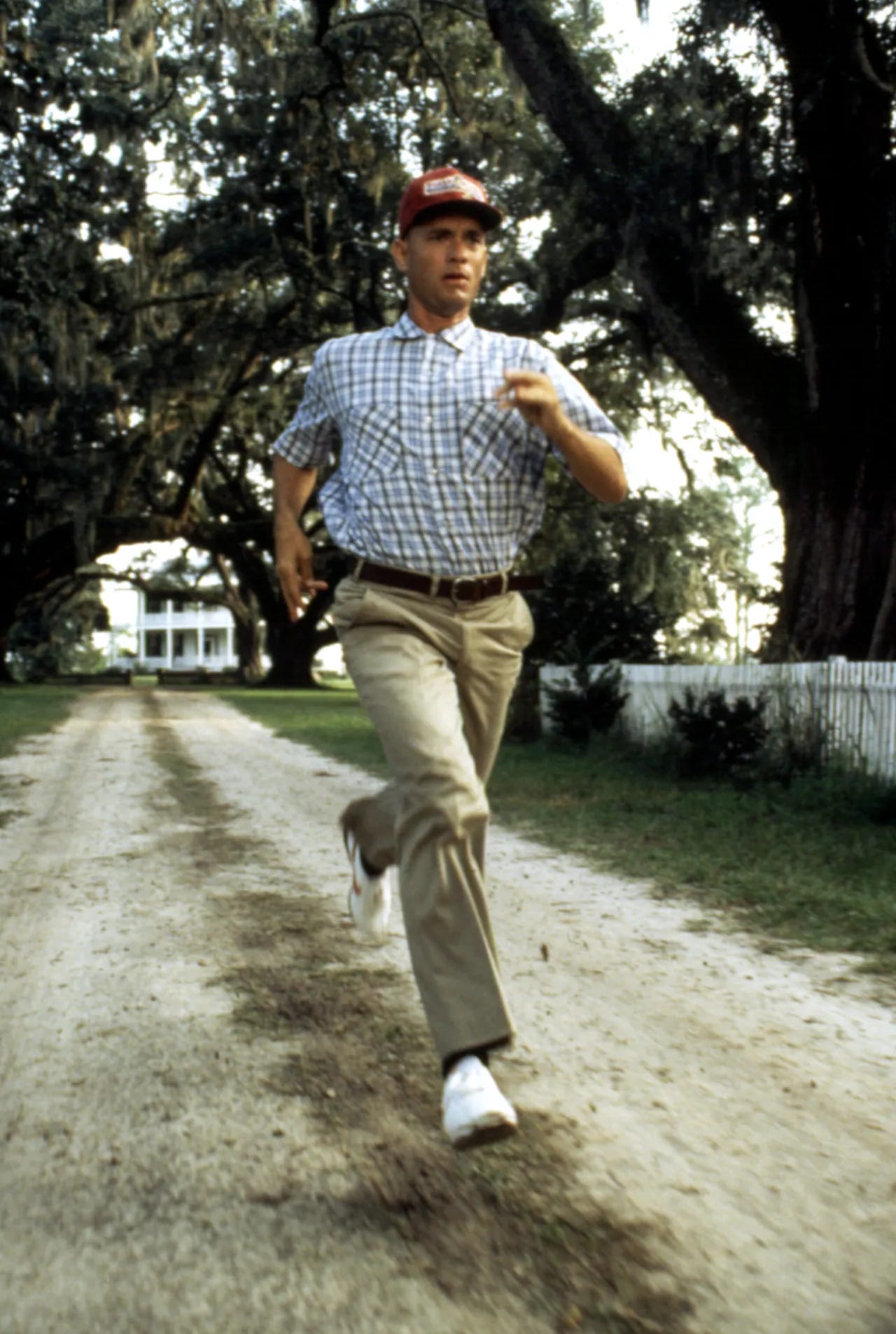
FORREST GUMP takes that emotional connection even further. The Nike Cortez becomes this quiet, constant presence, running alongside Forrest across the country and slowly transforming from a basic track shoe into a symbol of endurance, sincerity, and optimism. No one was trying to turn it into a fashion moment but it became iconic because audiences attached meaning to it. That’s where Nike’s on-screen power really clicks: the story comes first, the shoes absorb the narrative, and fashion follows. Nike later confirmed that Cortez sales surged after the film, sealing the shoe’s place as a cultural artifact.
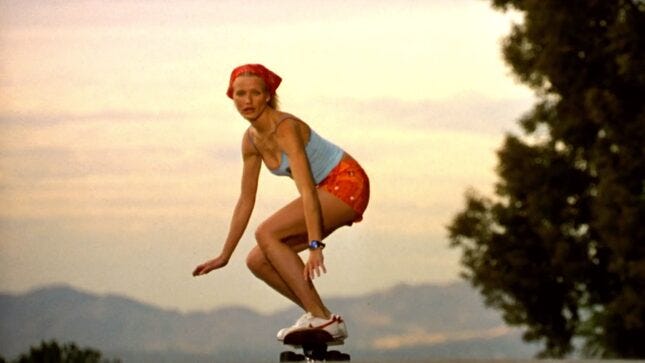
By the 2000s, that logic was fully embedded. The styling of the Cortez in CHARLIE’S ANGELS reframed the shoe as sexy and playful. Nike sneakers are integrated into action styling for women, not as an afterthought, but as part of a sleek, empowered wardrobe. This moment also directly influenced early-2000s women wearing the Cortez casually, and where the sneaker crossed from classic to cool-girl staple.
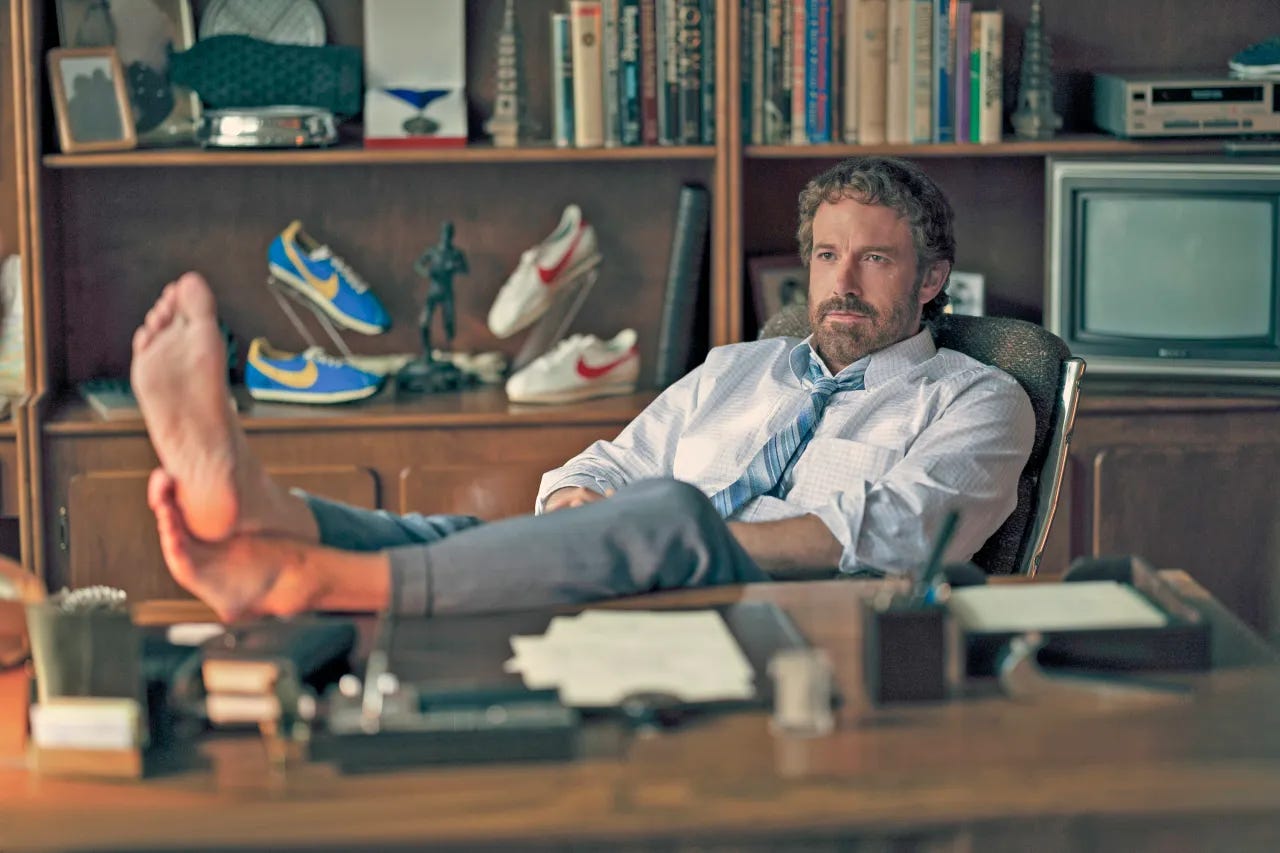
More recently, films like AIR look back at this history explicitly, framing Nike’s rise not just as a business story, but as a cultural one. The film makes it clear that sneakers became powerful because they sat at the crossroads of sport, storytelling, and belief in athletes, in culture, and in style as a form of expression.
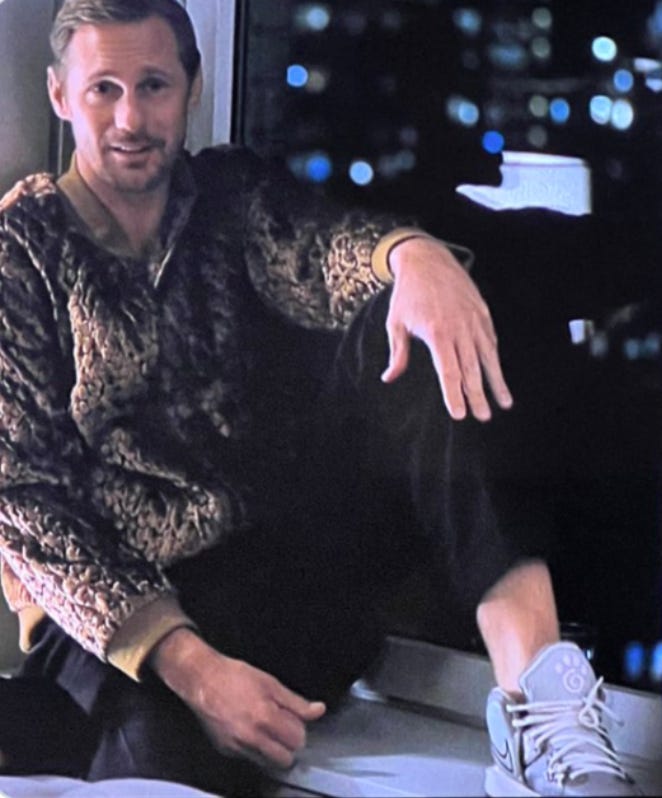
Looking at more recent examples, it’s clear that Nike’s role in film and television has only grown more layered and intentional. In SUCCESSION, Lukas Matsson wearing Kyrie Irving–branded Nike sneakers is a subtle but telling choice. They’re performance-driven shoes worn in a power context, and they signal tech-bro casual wealth and cultural awareness without ever feeling flashy.
Film and television didn’t just help make Nike fashionable; they taught us to read sneakers as both style and storytelling all at once. What began as athletic equipment has evolved into a shared visual language, one that communicates identity, power, and intention the moment a character steps into frame.
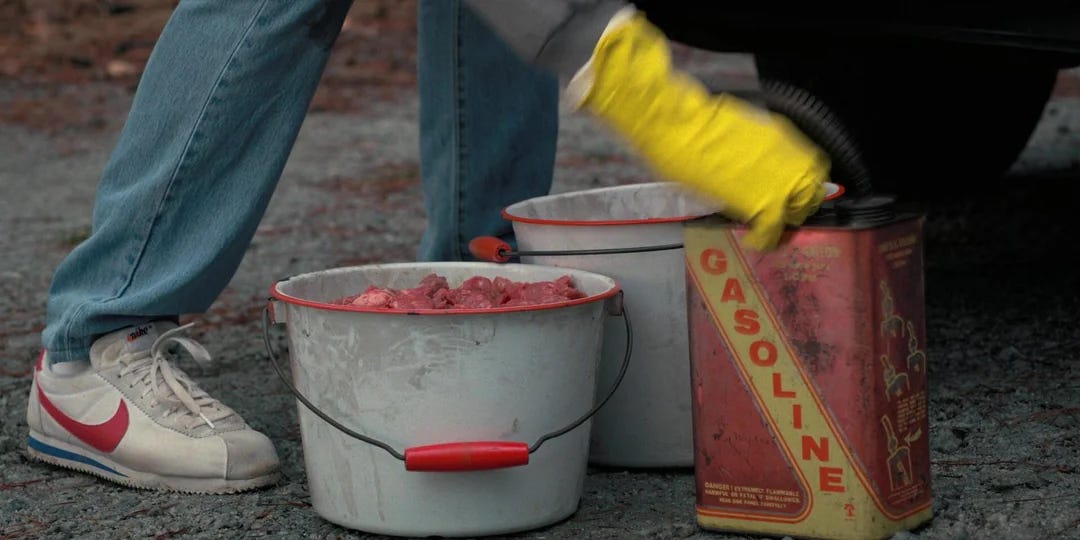
Why the outfit works: What makes Steve’s sneaker story land is that it sits right at the crossroads of all this history. He isn’t wearing Jordans to show off or futuristic sneakers to make a statement. He’s wearing Nikes the way real people do: because they make sense. Because they belong to the time and place he inhabits. They feel grounded in his world. Today, sneakers are a fashion mainstay not despite their athletic origins, but because of them. Film and television taught us how to see them differently and showed us that shoes could carry memory, character, and meaning.
Where to find similar pieces:
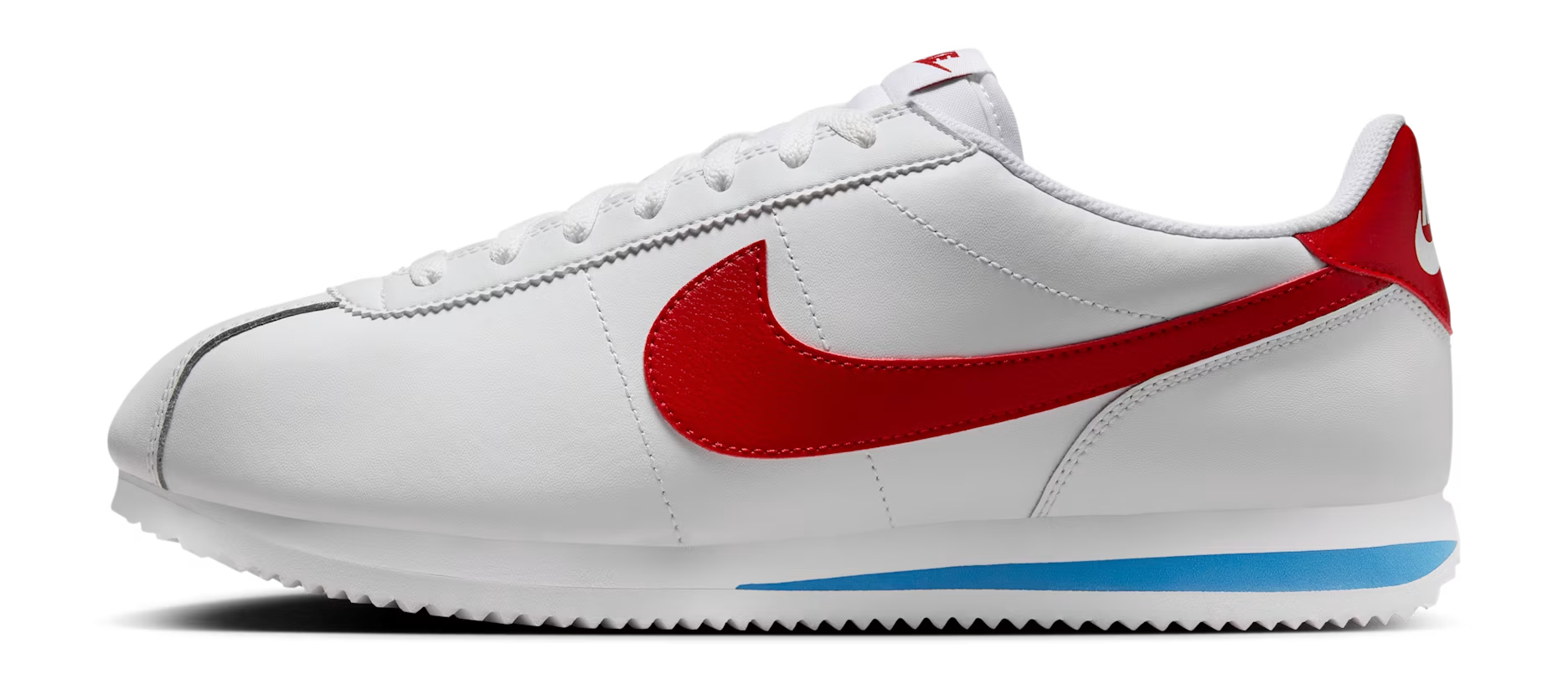
Nike / Cortez Leather Shoes in White/Varsity Blue/Varsity Red/ $95
A classic for a reason.
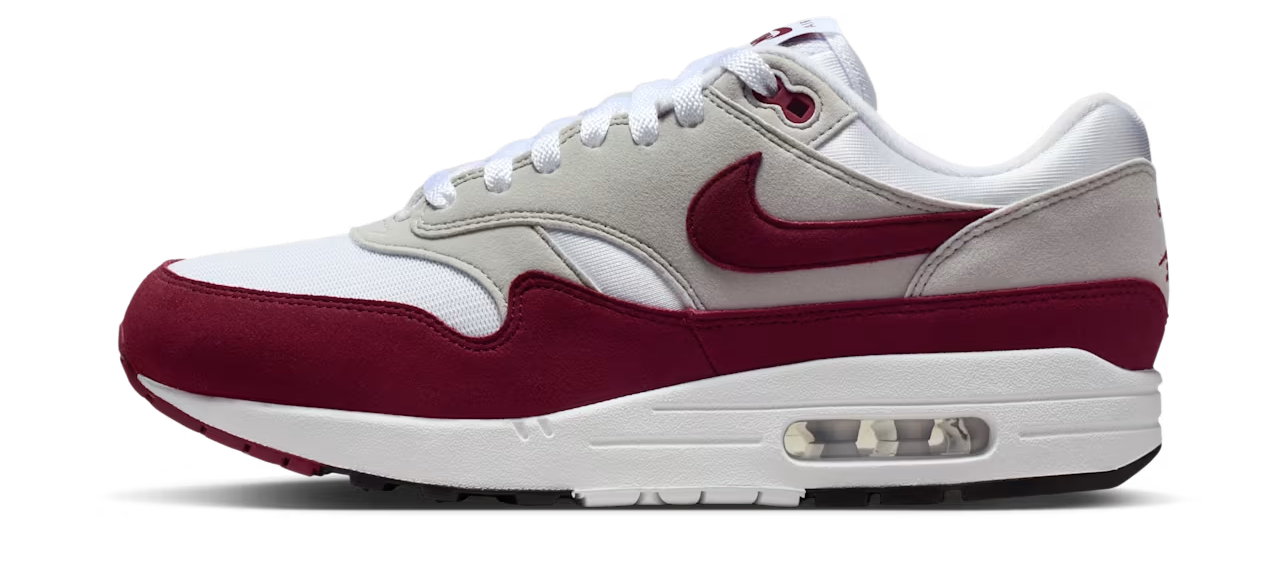
Nike / Air Max ‘87 x Stranger Things Team Maroon and Neutral Grey / $170
Nike and STRANGER THINGS actually came out with a collab to celebrate the final season of the show, and this pair is a great choice to channel your inner Steve.
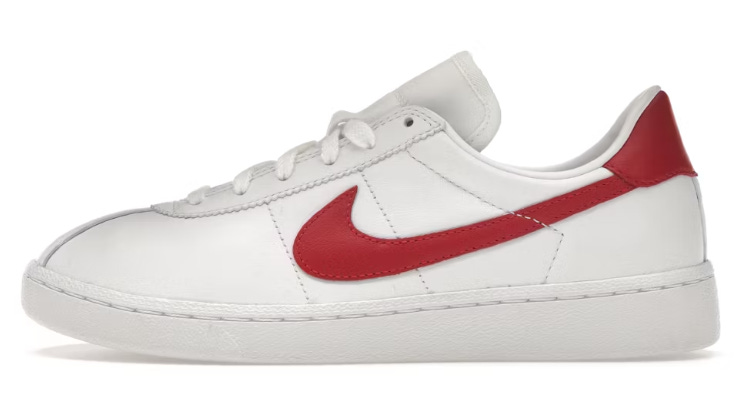
Nike / Leather Bruin McFly / $1,864
The Bruin sneaker is extremely difficult to find, and the price tag reflects that (when you can find it). I’ve sourced a pair here just in case you need THE shoe.
Fun fact: Steve Harrington was actually meant to die at the end of the first season of STRANGER THINGS, but the people loved him so much (I’m people) that they kept him alive, and he has continually grown into one of the most beloved characters in the series. Will he stay alive? That remains to be seen in the final episodes this month, but if he doesn’t, I can say with certainty that Christmas will be ruined.
XO, H
MERRY CHRISTMAS TO STEVE HARRINGTON
i guess getting these sneakers is the only way i can feel closer to my husband steve harrington lol. great piece btw :))